
Arabica, Robusta, Liberica, and Excelsa: A Guide to Coffee Types in the Philippines
Arabica, Robusta, Liberica, and Excelsa are four coffee types in the Philippines. They describe the coffee plant behind the beans, rather than a roast level or brewing method. Understanding the names helps you ask better questions when buying coffee for home or a café.
The Department of Agriculture’s Philippine Coffee Industry Roadmap 2021–2025 discusses all four types and identifies Liberica with kapeng barako. This guide uses that Philippine industry context while incorporating newer botanical research on Excelsa.
Freshly roasted Philippine coffee
Shop our coffee beans: Arabica, Robusta, Kapeng Barako and signature blends, roasted daily in Manila, whole bean or ground. Not sure which? Take the Coffee Match Quiz.
Shop Coffee Beans →Coffee types in the Philippines: species, origins, and blends
Arabica is Coffea arabica; Robusta is the familiar commercial name for Coffea canephora. Each contains diversity within it. World Coffee Research’s varieties catalog distinguishes these species from the varieties and cultivars grown within them.
An origin tells you where a coffee was grown. A roast description tells you how it was roasted. A blend combines coffees. Those details belong alongside the plant identity: a bag labeled “Arabica” still needs an origin, roast date, and recipe to tell you much about the coffee you will drink.
Coffee types in the Philippines at a glance
| Type | Botanical identity | Useful distinction | What to check when buying |
|---|---|---|---|
| Arabica | Coffea arabica | A species containing many varieties; associated with high-elevation cultivation in the Philippine roadmap. | Origin, variety when known, processing, and the actual lot’s tasting notes. |
| Robusta | Coffea canephora | Often fuller-bodied, more bitter, and lower in perceived acidity than Arabica; quality varies. | Processing quality and performance in your intended drink. |
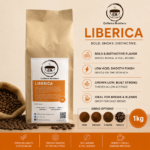
| Liberica | Coffea liberica | The coffee identified as kapeng barako in the Philippine roadmap, which describes its strong flavor and sharp aroma. | Whether the bag is pure Liberica or a blend, and the stated origin. |
| Excelsa | Coffea dewevrei in the 2025 revision | Older references may call it C. liberica var. dewevrei. | The supplier’s identification and lot details, rather than assuming it is interchangeable with Liberica. |
Sources for the comparison: the DA roadmap, World Coffee Research’s Robusta overview, and the 2025 Liberica species-delimitation study. These are broad distinctions, not tasting results for Caffeine Brothers products.
Arabica: look beyond the species name
World Coffee Research describes Arabica as a species with many varieties and a strong reputation for cup quality. That makes “100% Arabica” an identity statement, not a complete description of a bag’s flavor. Ask which coffee you are buying and how the roaster recommends brewing it. Source: WCR catalog scope.
For a practical comparison, taste a candidate lot black before deciding how it fits your menu. Record sweetness, perceived acidity, bitterness, aroma, and finish in your own words. Avoid deciding that every Arabica must taste fruity or sour.
Robusta: body and bitterness are tendencies, not a quality verdict
World Coffee Research reports that Robusta generally contains more caffeine than Arabica and often produces a fuller-bodied, more bitter cup with lower acidity. It also notes that careful handling and processing can produce coffee for specialty markets. Its common use in soluble coffee and blends does not mean every Robusta lot is identical. Source: WCR History of Robusta.
When considering a Robusta or an Arabica–Robusta blend for milk drinks, compare it both as espresso and in your actual milk recipe. Decide whether you like the resulting balance rather than treating the blend percentage as a score.
Liberica and kapeng barako
The Philippine roadmap associates kapeng barako with Liberica and describes a pronounced flavor and aroma. For purchasing, ask the seller to state the species and any blend components explicitly. A description such as “strong” does not provide that information. Source: DA roadmap, coffee-types discussion.
Try the coffee with a repeatable recipe and describe the lot you actually taste. Do not assume that a dark appearance, powerful aroma, or familiar product name independently verifies its botanical identity.
Why Excelsa has more than one scientific name in references
Older classifications placed Excelsa within Liberica as Coffea liberica var. dewevrei. In August 2025, research combining genomic, morphological, and geographic evidence supported separating that broader group into three species: C. liberica, C. dewevrei, and C. klainei. The study uses C. dewevrei for Excelsa. Source: Davis and colleagues, Nature Plants, 2025.
Kew’s current Excelsa and Liberica research project likewise uses C. dewevrei for Excelsa and C. liberica for Liberica. This explains the different names you may encounter; it does not authenticate any individual retail bag.
Compare coffee types in the Philippines in your own drinks
When comparing coffee types in the Philippines, use the following suggested buying tests, not claims that one species can only be brewed a particular way:
- Black filter coffee: compare candidate lots with the same starting coffee-to-water ratio, then adjust the grind for each lot.
- Espresso: record dry dose and beverage output. Taste before deciding whether the recipe needs adjustment.
- Milk drinks: use the same milk brand and measured quantity when comparing coffees.
- Blends: ask for the component species and proportions, then assess the finished beverage.
For planning quantities, see our coffee yield guide. For purchasing decisions, use your actual bean price and dose in the cost-per-cup breakdown.
For price comparisons by coffee type and blend, consult our Philippine coffee bean price tracker and request a current quotation for the specific lot you tasted.
For coffee types in the Philippines, a useful supplier conversation covers the species or blend, farm or region, processing method, roast date, recommended recipe, and available lot information. Browse Caffeine Brothers to begin that conversation, then choose using the coffee you have actually brewed.
Reference note: Reviewed September 13, 2026. The DA roadmap provides Philippine industry terminology; WCR provides Arabica and Robusta context; the 2025 study and Kew provide the updated Excelsa terminology. Brewing comparisons above are suggested procedures, not a completed blind tasting.

Buying coffee types in the Philippines: common questions
Does a species name guarantee a particular flavor?
No. Processing, roast, freshness, water, and brewing affect the cup. Use the comparison table to understand names, then judge the actual lot using a repeatable recipe.
Can I brew all four types with a filter brewer?
The species name does not prescribe a single brewing method. Start with a measured recipe, adjust it to the coffee, and keep notes. When comparing coffee types in the Philippines, record both plant identity and supplier lot details.
Read our full guide to kapeng barako: what it is, how it tastes, its caffeine, how to brew it and price per kilo. Or shop our Kapeng Barako Coffee Beans.
 Previous Post
 Next Post