
How to Survey Philippine Cafés on Bean Preferences and Supplier Priorities
About this guide: This is a practical guide to running a Philippine café purchasing survey: what to ask cafés about beans, order sizes and supplier priorities, and how to report the results. It does not present survey results.
What this guide can answer
A properly documented café purchasing survey can describe which bean types cafés buy, how much they order, how they choose suppliers, and which service terms matter most. The Philippine Coffee Industry Roadmap 2021–2025 provides national industry context, but it does not substitute for a current survey of café buyers. Use the roadmap for background and collect café-level responses separately.
Coffee beans for your café
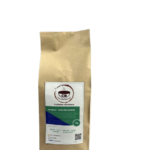
Caffeine Brothers supplies cafés, offices and restaurants with freshly roasted Philippine coffee in 10 kg wholesale boxes from ₱773/kg, with free Metro Manila delivery and a free sample before you commit.
See Wholesale Prices →What to measure
Define the population before writing the questionnaire. Decide whether the study covers independent cafés, chains, hotel cafés, kiosks, mobile carts, roasters that operate cafés, or all of these groups. Record the respondent’s business type, city or region, years operating, number of locations, and approximate weekly beverage volume. These screening variables let readers understand who the results represent.
A practical questionnaire can cover five areas:
- Bean preference: Arabica, Robusta, Liberica, Excelsa or blends; whole bean versus ground; roast level; origin preference; and whether the café uses one house blend or several recipes.
- Order size and cadence: kilograms per order, orders per month, normal stock cover, minimum order quantity, and acceptable lead time.
- Supplier priorities: price, roast-date freshness, consistency, delivery reliability, payment terms, technical support, custom blending and traceability.
- Quality control: whether the café uses a recipe card, logs dial-in waste, checks incoming lots, or conducts regular cupping.
- Business context: estimated daily cups, drink mix, storage capacity and whether beans are used for espresso, filter, retail packs or all three.
Avoid asking respondents for exact revenue unless necessary. Use ranges for sensitive business questions and explain how responses will be stored and reported.
How to sample cafés
A convenience sample recruited through social media can be useful for exploratory research, but it should be described as a non-probability sample. It cannot automatically represent every Philippine café. For a stronger design, build a list of eligible cafés by region and business type, then invite a defined number from each group.
If probability sampling is not practical, report the recruitment channels, eligibility rules, number invited, number started, number completed, exclusions and response rate. The U.S. Bureau of Labor Statistics response-rate guidance explains why the numerator and denominator must be defined. AAPOR’s survey transparency guidance recommends reporting the population, sample construction, recruitment, mode, questionnaire and weighting.
A survey instrument you can adapt
Use mostly closed questions so responses can be compared, then add one or two open questions for supplier concerns. Example items:
- Which bean format do you purchase most often? Whole bean / ground / both.
- Which coffee types appear in your current menu? Arabica / Robusta / Liberica / Excelsa / blends / other.
- How many kilograms do you normally order at one time? Less than 5 / 5–9.9 / 10–24.9 / 25–49.9 / 50 or more.
- How often do you reorder? Weekly / every two weeks / monthly / less often / when stock is low.
- Rank your top three supplier priorities: price, freshness, consistency, delivery, technical support, payment terms, custom blend, traceability.
- What is the longest acceptable delivery lead time?
- What is the biggest purchasing problem you face today?
Pretest the questionnaire with eligible café operators. Check that “order size,” “monthly usage” and “lead time” mean the same thing to each respondent. Do not change wording mid-fieldwork without recording the change.
How to report results when data exist
Report the number of eligible invitations, completed responses and partial responses. Show the response-rate formula and describe missing answers. Present counts and percentages with the denominator for each question. If a respondent could select multiple supplier priorities, make clear that percentages will not sum to 100%.
Do not report a ranking without showing how ties, missing values and “other” answers were handled. If the sample is small or recruited by convenience, use language such as “among participating cafés” rather than “Philippine cafés prefer.” The House of Commons sampling brief explains why sample size depends on the target population and desired precision. The Census Bureau sample-size guidance provides additional context on accuracy and data quality.
Turning purchasing answers into an order plan
Once a café has its own daily cup count, average dose and waste allowance, it can estimate monthly bean requirements with the beans-per-month calculator. Supplier price comparisons belong in the coffee-beans price tracker, while delivery terms and volume discussions can be organized with the supplier negotiation framework. These internal pages are planning tools, not independent evidence of survey findings.
A survey may reveal that cafés value consistency or lead time, but it does not prove that one supplier is objectively better. Validate supplier claims with roast dates, delivered weights, invoices, service records and quality checks. Keep purchasing analysis separate from sensory preference.
What this article does not claim
No Caffeine Brothers café purchasing survey was conducted for this article. There are no original respondent results, sample percentages, supplier rankings or order-size averages to report. The questionnaire and reporting guidance above are recommendations based on published survey standards and Philippine coffee-industry context. A future edition can add findings after a real field study with disclosed methods and data.
References
- Philippine Coffee Industry Roadmap 2021–2025, DTI
- AAPOR Best Practices and Transparency Initiative
- U.S. Bureau of Labor Statistics response-rate guidance
- House of Commons Library: Survey sampling
- U.S. Census Bureau: Sample Size and Data Quality
Sources accessed October 2, 2026.
 Previous Post
 Next Post