
Philippine Coffee Origins: Where Coffee Grows and How Each Tastes
Philippine coffee is grown on all three island groups, but mostly in Mindanao, which produces about 84% of the harvest. The country grows four species: Robusta, Arabica, Excelsa and Liberica (kapeng barako). Highland Arabica from Benguet, Sagada, Mt. Apo and Bukidnon tastes floral and sweet; lowland Robusta and barako from Batangas, Cavite and Mindanao tastes bold, chocolatey and smoky.
Quick facts
- Species grown: Robusta (about 69% of the 2020 harvest), Arabica (about 24%), Excelsa (about 6%) and Liberica, or barako (about 1%)
- Biggest producing region: SOCCSKSARGEN, about 36% of national output (2020)
- Top province: Sultan Kudarat (2023), followed by Bukidnon and Cavite
- Famous highland origins: Benguet (Atok, Kapangan), Sagada, Kalinga, Mt. Apo, Mt. Kitanglad, Mt. Matutum
- Heritage lowland origins: Batangas (Lipa) and Cavite (Amadeo), home of kapeng barako
- History: brought by Spanish friars in the 18th century; the Philippines was reputed to be the world’s fourth-largest coffee exporter in the 1880s
In this guide
- Philippine coffee at a glance
- Philippine coffee regions table
- Cordillera: Benguet, Sagada, Kalinga, Ifugao
- Batangas and Cavite: the barako heartland
- Mindanao: Mt. Apo, Bukidnon, Sultan Kudarat, Mt. Matutum
- Visayas
- A short history of Philippine coffee
- How to buy origin coffee
- Where Caffeine Brothers coffee comes from
- FAQ
Philippine coffee at a glance
The Philippines is one of the few countries that grows all four commercially viable coffee species: Arabica, Robusta, Liberica and Excelsa. In the Department of Agriculture’s (DA) 2020 figures, the country produced about 60,640 tonnes of dried coffee cherries (roughly 30,320 tonnes of green beans).
| Species | 2020 output, tonnes of dried cherries | Share | Typical taste |
|---|---|---|---|
| Robusta (C. canephora) | about 41,810 | about 69% | Bold, bitter, dark chocolate, thick crema |
| Arabica (C. arabica) | about 14,660 | about 24% | Floral, caramel, brighter acidity, smooth |
| Excelsa | about 3,710 | about 6% | Tart and fruity; often blended |
| Liberica (barako) | about 460 | about 1% | Strong, smoky, woody, pungent aroma |
We computed these shares from the DA tonnage. The same DA roadmap prints different percentages in its text (for example 76.5% Robusta and 16.7% Arabica), which do not match its own tonnage table, so we use the figures calculated from the tonnes.
Where it grows matters as much as which species it is. Mindanao produced about 84% of the 2020 harvest, Luzon about 9% and the Visayas about 7%. Arabica needs cool highlands; Robusta, Liberica and Excelsa do well in warmer lowlands and mid-elevations. For a deeper look at each species, see our guide to the types of coffee that grow in the Philippines.
Philippine coffee regions table
| Region | Provinces / areas | Main species | Elevation / notes | Typical taste |
|---|---|---|---|---|
| Cordillera (CAR) | Benguet (Atok, Kapangan), Mountain Province (Sagada, Besao), Kalinga, Ifugao | Arabica (best known); Robusta is larger by volume | Arabica at about 1,000–1,800 m; about 3% of national output | Arabica: floral, sweet, nutty, cocoa, bright acidity |
| CALABARZON | Batangas (Lipa), Cavite (Amadeo, Indang) | Robusta, Excelsa, Liberica (barako) | About 300–500 m; home of kapeng barako | Bold, smoky, woody, chocolatey |
| SOCCSKSARGEN | Sultan Kudarat, South Cotabato (Mt. Matutum) | Robusta and Arabica | Largest region, about 36% of output (2020) | Robusta: chocolatey, full-bodied; Arabica: berry, spice |
| Davao Region | Davao del Sur (Mt. Apo, Kapatagan), Davao de Oro | Robusta, Arabica, Excelsa | Mt. Apo Arabica at about 1,200 m; about 18% of output | Cacao, dried fruit, hint of citrus |
| Northern Mindanao | Bukidnon (Mt. Kitanglad) | Mostly Robusta; highland Arabica | Kitanglad Arabica at about 1,200 m; about 9% of output | Light, nutty, floral (Arabica) |
| BARMM | Maguindanao, Sulu, Basilan | Robusta, Excelsa | About 17% of output; a main Excelsa source | Mostly commercial Robusta |
| Visayas | Iloilo and the rest of Western Visayas | Robusta, some Arabica and Liberica | About 500–1,000 m; about 7% of output | Varies by farm |
Shares are from the DA’s 2020 data; elevation ranges are from the Philippine Coffee Board and from roasters’ published lot details. Taste notes describe typical lots; any single coffee will vary with farm, processing and roast.
Cordillera: Benguet, Sagada, Kalinga, Ifugao
The Cordillera in northern Luzon is the Philippines’ best-known Arabica country, even though it produces only about 3% of the national harvest, and more of that is Robusta than Arabica. The Philippine Coffee Board puts Cordillera Arabica at about 1,000–1,800 metres above sea level, with varieties such as Typica, Red and Yellow Bourbon, Mundo Novo and Caturra.
Benguet coffee (Atok, Kapangan)
Benguet Arabica is mostly Typica that has adapted to local conditions. The Slow Food Foundation lists Benguet coffee from Atok, at about 1,600 m, on its Ark of Taste of endangered heritage foods. Kapangan is another known source: one natural-process Kapangan lot at 1,400 m was described by its roaster as muscovado, dark cocoa and caramel. Expect a clean, sweet cup with floral aroma and bright acidity. This is where our Arabica Coffee Beans come from.
Sagada coffee (Mountain Province)
Sagada coffee is Arabica, mainly Typica, grown by smallholders in Sagada and neighbouring Besao in Mountain Province, at roughly 1,300–1,400 m. Most accounts say Arabica arrived there in the late 1800s. Roasters describe Sagada coffee as sweet and nutty with floral notes, cocoa and a bittersweet finish. Volumes are small, which is why Sagada beans are hard to find and usually priced higher.
Kalinga coffee
Kalinga grows both Robusta and Arabica, much of it at lower elevations (roughly 300–900 m in areas such as Tanudan and Lubuagan). Kalinga is known for “fine Robusta”: the winning Robusta at the 2024 Kalinga Coffee Quality Competition, from Tanudan, scored 82 points with notes of dried berries, honey, tamarind and citrus.
Ifugao
Ifugao is a smaller, emerging origin. Farmers in Kiangan and Asipulo grow coffee including Robusta, and researchers note good quality but limited volume.
Batangas and Cavite: the barako heartland
CALABARZON is the historic centre of Philippine coffee and the home of kapeng barako, the Liberica coffee named after the Tagalog word for a wild boar. Farms here sit at about 300–500 m and grow Robusta, Excelsa and Liberica. Barako is strong, smoky and woody with a pungent aroma. Note that it is not higher in caffeine: Liberica has about the same caffeine as Arabica and about half that of Robusta.
Batangas and Lipa
Spanish friars spread coffee through Batangas in the 18th century, and Lipa became its centre. By the mid-1850s Batangas was exporting coffee to America and Australia, and Europe opened up as a market after the Suez Canal opened. Coffee rust reached the area around 1889 to 1891 and devastated Batangas’ farms; many Lipa growers abandoned coffee altogether. Today many Batangas farmers grow Robusta instead of barako, because barako trees are huge and need more land for the same yield. Batangas was still the eighth-largest coffee-producing province in 2023. Our Robusta and Kapeng Barako come from Batangas.
Amadeo, Cavite
Amadeo, in upland Cavite, promotes itself as the coffee capital of the Philippines. The Philippine Coffee Board reports about 4,790 hectares of coffee there, the largest coffee area in Cavite, and the town celebrates its harvest every year with the Pahimis coffee festival. Cavite as a whole was the third-largest coffee-producing province in 2023.
Mindanao: Mt. Apo, Bukidnon, Sultan Kudarat, Mt. Matutum
Mindanao grows most Philippine coffee, including most of the country’s Arabica and Robusta. Seven of the top ten coffee-producing provinces in 2023 were in Mindanao. The Philippine Coffee Board lists Mindanao coffee at about 700 m to over 1,200 m.
Sultan Kudarat and SOCCSKSARGEN
SOCCSKSARGEN (Region 12) is the country’s biggest coffee region, with about 21,590 tonnes of dried cherries in 2020, or about 36% of the national total. It led in both Robusta (about 12,340 tonnes) and Arabica (about 8,910 tonnes). Within it, Sultan Kudarat was the top coffee-producing province in 2023, with about 21,440 tonnes according to PSA figures, and its farmers now win specialty competitions too.
Mt. Matutum (South Cotabato)
Mt. Matutum, near Tupi in South Cotabato, produces highland Arabica at about 800–1,000 m and fine Robusta. One roaster describes its Mt. Matutum Arabica as berry-like and spicy, with medium body and acidity.
Mt. Apo (Davao)
The Davao Region produced about 18% of the 2020 harvest, including about 2,320 tonnes of Arabica. Mt. Apo coffee, much of it from the Kapatagan side in Davao del Sur, is grown at around 1,200 m. Specialty roasters describe natural-process Mt. Apo lots with notes of cacao, dried fruit and a hint of citrus.
Bukidnon and Mt. Kitanglad
Bukidnon, in Northern Mindanao, was the second-largest coffee-producing province in 2023. Most of its volume is Robusta, but the slopes of Mt. Kitanglad produce Arabica at about 1,200 m that roasters describe as light, nutty and floral with high acidity.
Visayas
The Visayas produced about 7% of the 2020 harvest, mostly in Western Visayas. The Philippine Coffee Board lists Visayan Arabica and Robusta at about 500–1,000 m. Iloilo was the fifth-largest coffee-producing province in 2023, and Western Visayas is one of the main sources of Liberica, alongside BARMM.
A short history of Philippine coffee
| When | What happened |
|---|---|
| 18th century | Spanish friars bring coffee to the Philippines; it spreads through Batangas, with Lipa as its centre. |
| Mid-1850s | Batangas exports coffee to America and Australia; Europe follows after the Suez Canal opens. |
| 1875–1877 | Arabica is introduced to Benguet and moved to higher altitudes. |
| 1880s | The Philippines is reputed to be the world’s fourth-largest coffee exporter. |
| About 1889–1891 | Coffee rust devastates Batangas; many Lipa farmers abandon coffee. |
| Late 1890s | Arabica is planted in Sagada. |
| 2020 | About 60,640 tonnes of dried cherries; Mindanao grows about 84%. |
| 2023 | Sultan Kudarat is the top coffee-producing province. |
How to buy origin coffee
- Look for a named place. “Benguet”, “Sagada” or “Mt. Apo” tells you more than “Philippine coffee”. A town, farm or cooperative is even better.
- Check the species. “Barako” should be Liberica, and “Sagada” or “Benguet” should usually be Arabica. Blends should list what is in them.
- Match origin to your taste. Want floral and bright? Pick highland Arabica. Want bold and chocolatey for milk drinks? Pick Robusta or barako.
- Check the roast date. Fresh beans matter more than a famous name.
- Choose the right grind. Coarse for French press and cold brew, normal for drip and pour-over, fine for espresso and moka pot.
Not sure where to start? Read how to choose coffee beans or take our Coffee Match Quiz.
Where Caffeine Brothers coffee comes from
| Coffee | Origin | Roast | Taste | Price (200 g / 1 kg) |
|---|---|---|---|---|
| Arabica Coffee Beans | Benguet | Medium | Floral aroma, bright acidity, smooth, mild nutty finish | ₱292 / ₱1,068 |
| Robusta Coffee Beans | Batangas | Dark | Bold, chocolatey, strong body, thick crema | ₱231 / ₱813 |
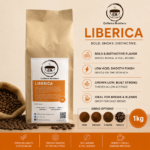
| Kapeng Barako Coffee Beans | Batangas (100% Liberica) | Dark | Smoky, woody, very bold | ₱242 / ₱858 |
| CB’s Finest Signature Blend | Batangas + Benguet | Medium + dark | Balanced, nutty, caramel | ₱244 / ₱866 |
Every coffee comes whole bean or ground coarse, normal or fine. Pick normal for drip and pour-over Benguet Arabica, fine for Batangas Robusta in espresso or a moka pot, and coarse for barako in a French press. Want one cup at a time? Try our coffee drip bags (₱240 per box of 10). Cafés can order 10 kg wholesale boxes, or start with a free sample.
Frequently asked questions
Where is the best coffee in the Philippines grown?
It depends on what you like. For floral, bright Arabica, look to the highlands: Benguet, Sagada, Mt. Apo, Mt. Kitanglad in Bukidnon and Mt. Matutum. For bold, smoky kapeng barako and Robusta, look to Batangas and Cavite. Mindanao grows most Philippine coffee overall.
What is Sagada coffee?
Sagada coffee is Arabica, mainly the Typica variety, grown by smallholders in Sagada and Besao in Mountain Province at about 1,300 to 1,400 metres. It is usually sweet and nutty with floral and cocoa notes, and it is produced in small volumes.
What coffee is Benguet known for?
Benguet is known for highland Arabica, mostly Typica, grown at about 1,000 to 1,600 metres in towns such as Atok and Kapangan. It is floral and sweet with bright acidity, and Benguet coffee is listed on Slow Food’s Ark of Taste.
Which region produces the most coffee in the Philippines?
SOCCSKSARGEN in Mindanao produced about 36% of Philippine coffee in 2020, followed by the Davao Region and BARMM. Sultan Kudarat was the top coffee-producing province in 2023, ahead of Bukidnon and Cavite.
What are the 4 types of coffee grown in the Philippines?
Robusta (about 69% of the 2020 harvest), Arabica (about 24%), Excelsa (about 6%) and Liberica, known locally as kapeng barako (about 1%).
References
- Department of Agriculture, Philippine Coffee Industry Roadmap 2021–2025 (2020 production by coffee type and region)
- Philippine Coffee Board, Philippine Coffee (history, growing regions, elevations)
- Philippine Coffee Board, Coffee Capital Perks Up (Amadeo, Cavite)
- SunStar, Top 10 coffee-producing provinces in the PH (PSA 2023 data)
- Philippine Information Agency, Sultan Kudarat eyes more opportunities to expand coffee industry
- Philippine Information Agency, Tanudan farmer tops 2024 Kalinga Coffee Quality Competition
- Slow Food Foundation, Ark of Taste: Benguet Coffee and Barako Coffee
- Wikipedia, Coffee production in the Philippines, Benguet coffee and Sagada coffee (history dates)
- University of the Philippines Open University, Coffee project site visit in Asipulo, Ifugao
- Elevations and tasting notes for individual lots (Sagada, Kapangan, Mt. Apo, Mt. Kitanglad, Mt. Matutum, Kalinga) are taken from lot details published by Philippine specialty roasters, checked October 2026.
Want the numbers? See our Philippine coffee-growing regions map and production data and Philippine coffee statistics.
Last updated October 2, 2026.
 Previous Post
 Next Post