Description
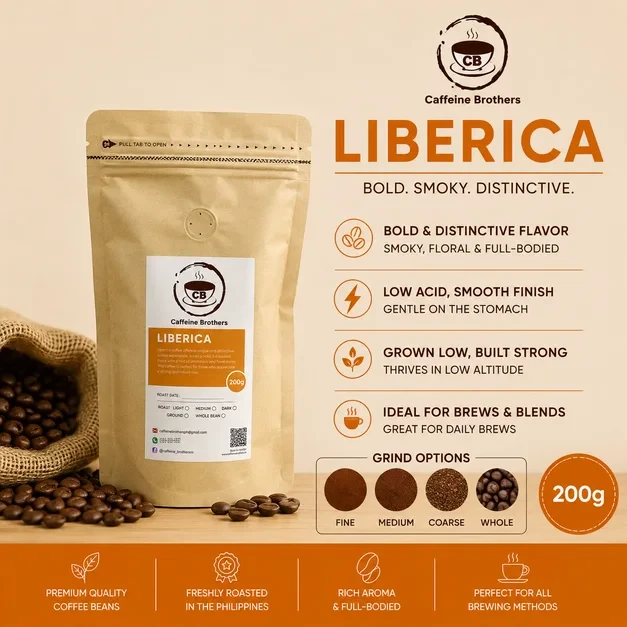
Quick answer: Kapeng barako, or barako coffee, is the strong, smoky Liberica coffee of Batangas. Ours is 100% Batangas Liberica, dark roasted daily in Manila, from ₱242 for 200 g or ₱858 per kilo, whole bean or ground, delivered nationwide.
What is barako coffee?
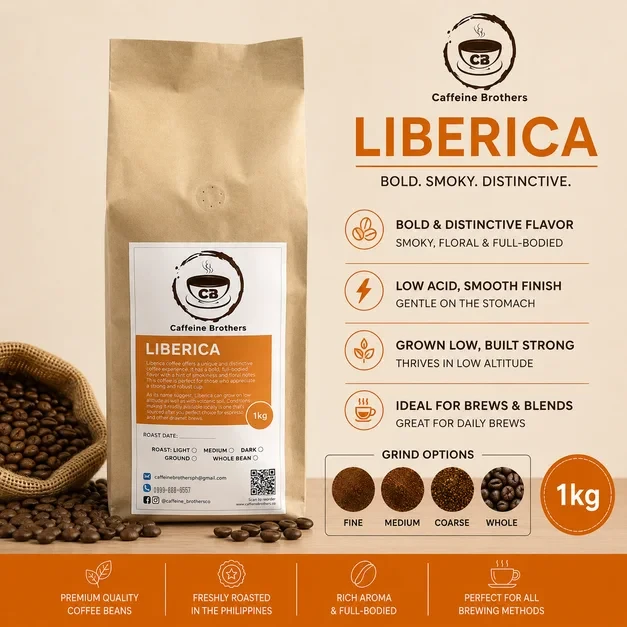
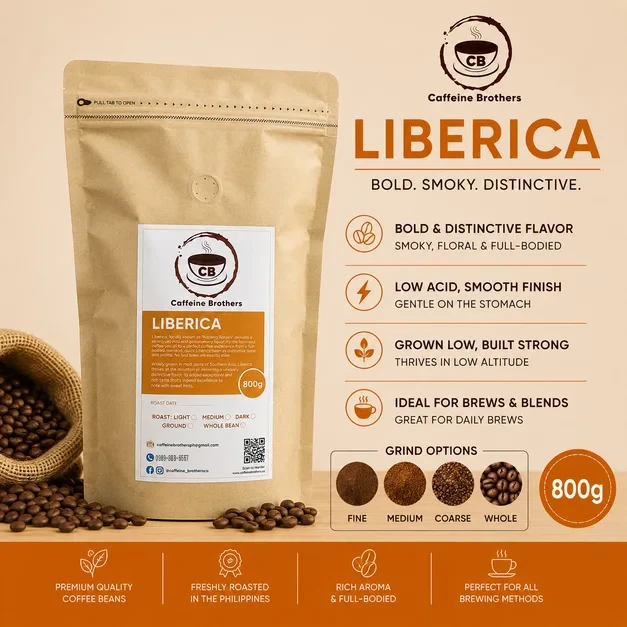
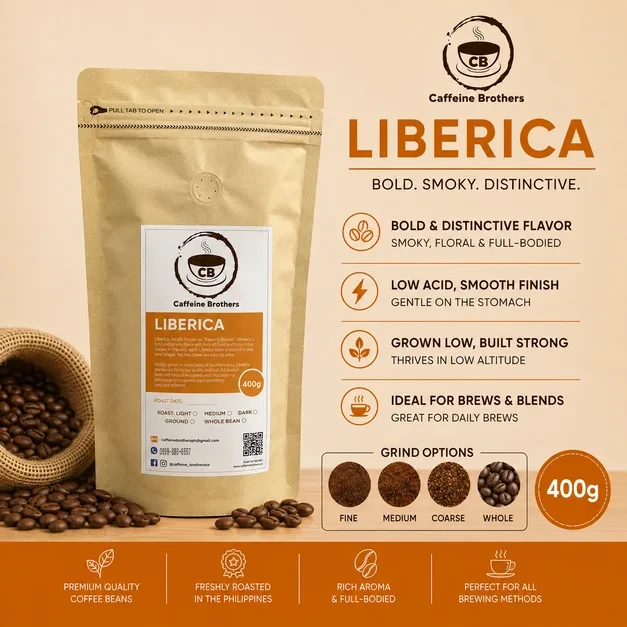
Kapeng barako is the Filipino name for coffee from the Liberica species, grown in Batangas for generations. Ours is 100% Batangas Liberica, dark roasted and roasted daily, for a strong, bold cup with a pungent aroma, a bitter body and a lingering dark-chocolate finish with sweet hints.
| Species | Liberica (Coffea liberica), known locally as kapeng barako |
|---|---|
| Origin | Batangas, Philippines |
| Roast | Dark |
| Taste | Strong kick, pungent aroma, bold and bitter, dark chocolate with sweet hints |
| Best for | French press, moka pot, brewed (drip) coffee, iced coffee |
Is barako coffee strong? Barako vs Arabica vs Robusta
Barako is strong in flavour: smoky, woody and heavy-bodied, usually dark roasted. Its caffeine, though, is similar to Arabica and lower than Robusta, so it tastes stronger than it is.
| Coffee | Taste | Caffeine | Best for |
|---|---|---|---|
| Kapeng Barako (Liberica, Batangas) | Smoky, woody, bold, heavy body | Similar to Arabica | French press, moka pot, brewed coffee with milk and sugar |
| Arabica (Benguet) | Floral, bright, smooth | Lowest of the three | Pour-over, drip, black coffee |
| Robusta (Batangas) | Chocolatey, bitter, heavy body | About twice Arabica | Espresso, iced coffee, milk drinks |
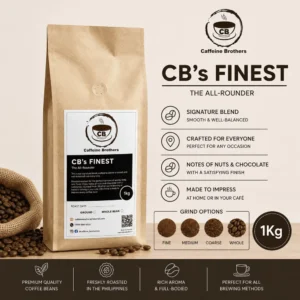
Want a smoother barako cup? Try our CB’s Finest Signature Blend, which balances Batangas and Benguet beans.
Price per size
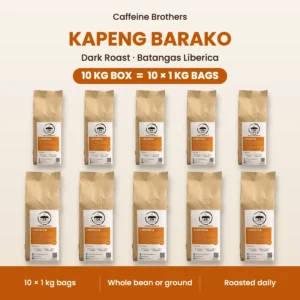
Bigger bags cost less per 100 g. Cafés and offices can buy the 10 kg wholesale box at ₱816/kg; see all wholesale coffee prices.
| Size | Price | Per 100 g |
|---|---|---|
| 200 g | ₱242 | ₱121 |
| 400 g | ₱417 | ₱104 |
| 800 g | ₱744 | ₱93 |
| 1 kg | ₱858 | ₱86 |
| 10 kg (wholesale) | ₱8,160 | ₱82 |
How to brew it
- French press: about 15 g coarse-ground coffee per 250 ml hot water; steep 4 minutes, then press.
- Drip or pour-over: about 1 tablespoon (7–8 g) of normal-ground coffee per 180 ml cup.
- Espresso or moka pot: use a fine grind and fill the basket level without pressing hard in a moka pot.
Fine-tune your cup with our coffee-to-water ratio chart. Store beans in an airtight container away from heat; see how long coffee beans stay fresh.
Frequently asked questions
How much is Kapeng Barako per kilo?
Our Kapeng Barako is ₱858 per 1 kg bag, or ₱816/kg in a 10 kg wholesale box (₱8,160).
Can I buy it whole bean or ground?
Both. Choose “NO” for whole beans, or pick a grind: coarse for French press, normal for drip and pour-over, fine for espresso and moka pot.
How fresh is the coffee?
We roast daily, so your coffee ships freshly roasted.
How fast is delivery?
Same-day delivery via Lalamove, Grab or Angkas Padala is available in Metro Manila and nearby areas for orders placed by 3 PM, Monday to Friday; the rider fee is paid by the customer. We also ship nationwide by courier. The courier fee depends on your location and order weight: for orders up to 500 g it is ₱90 in Metro Manila, ₱120 in the rest of Luzon, ₱170 to Visayas and ₱190 to Mindanao. See all shipping rates and delivery times.
Is kapeng barako Liberica or Excelsa?
Kapeng barako refers to Liberica coffee (Coffea liberica). Excelsa is a related but different coffee. Our Kapeng Barako is 100% Liberica from Batangas.
Is barako coffee strong?
Yes in flavour: it is bold, smoky and heavy-bodied, and usually dark roasted. Its caffeine is similar to Arabica and lower than Robusta, so it tastes stronger than it is.
Why is it called kapeng barako?
“Kape” means coffee and “barako” is Tagalog for a stud or a tough, macho man, a nod to the coffee’s strong, rugged taste.
Where does kapeng barako come from?
Mainly Batangas, especially around Lipa, and nearby Cavite, south of Manila. Our Kapeng Barako is 100% Batangas Liberica.
Learn more: Kapeng Barako: what it is, taste, caffeine and price.

Reviews
There are no reviews yet.